Interior vs. exterior basement waterproofing: how to choose
By Sofia Kaur · Updated 2026-08-10
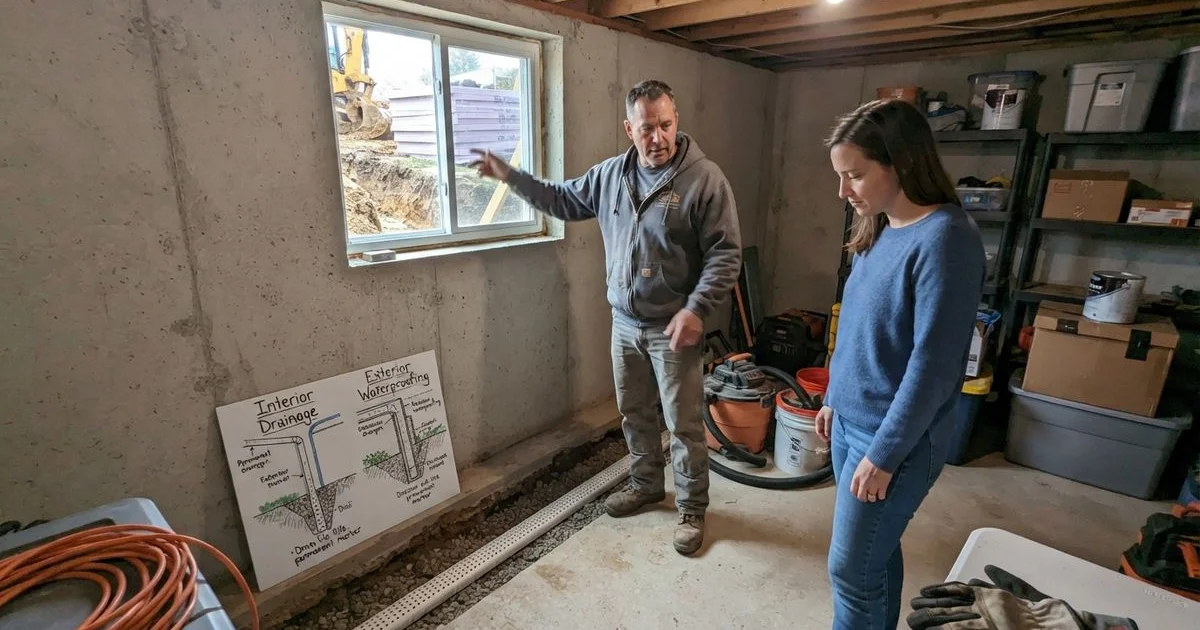
Homeowners researching a wet basement fix quickly run into this fork: fix it from the inside, or dig up the outside. Both work. They solve different parts of the same problem, and the right one depends on what’s actually happening at your foundation.
What interior systems actually do
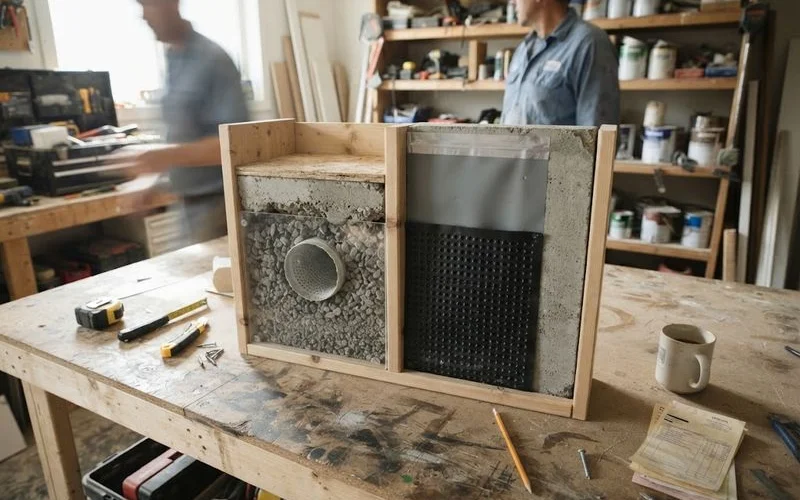
Interior drain tile, sump pumps, and crack injection all manage water after it has already reached the inside of your foundation wall or floor. A channel is cut along the basement’s interior perimeter, perforated pipe collects water that seeps through the wall or floor joint, and a sump pump moves it out of the house. Crack injection seals a specific leak point from inside using epoxy or polyurethane.
This approach is less invasive (no digging outside), generally faster to install, and less expensive. The tradeoff: it doesn’t stop water from reaching your foundation walls in the first place, it just intercepts it once it’s there. If hydrostatic pressure is pushing hard enough against the wall for long enough, interior systems can keep the basement dry while the wall itself continues to take on stress.
What exterior systems actually do
Exterior work excavates down to the footing outside the foundation, applies a waterproof membrane or coating directly to the wall, and typically installs or replaces the drain tile that sits at the footing level. This intercepts groundwater before it ever reaches the basement, relieving pressure on the wall itself rather than just managing the water that gets through.
This is the more thorough fix, and it’s also the more expensive and disruptive one. It requires digging along the affected section of foundation, which displaces landscaping, and takes considerably longer than interior work.
Side-by-side comparison
| Interior systems | Exterior systems | |
|---|---|---|
| What it fixes | Manages water after it reaches the foundation | Stops water before it reaches the foundation |
| Typical cost | Lower: a few hundred to around $12,000 | Higher: often $10,000-$25,000+ |
| Typical timeline | 1-3 days | A week or more |
| Disruption | Inside the basement, dust and noise | Yard, landscaping, walkways |
| Best for | Seepage, floor-wall joint leaks, budget-conscious fixes | Active hydrostatic pressure, bowing walls, older failed exterior drain tile |
| Effect on foundation itself | Manages symptoms | Can extend structural life of the wall |
How to actually decide
Start with a real diagnosis, not a guess. If water shows up mainly as damp spots or occasional seepage after heavy rain, interior drain tile is often the more cost-effective fix. If a wall shows signs of bowing, if cracks keep widening, or if the home has old, failed exterior drain tile from before the 1970s, exterior work addresses the root cause rather than working around it.
Spring thaw is when this decision often gets forced fast, since snowmelt can turn a manageable seepage problem into a flooded basement overnight; the spring thaw prep guide covers what to check before that happens.
Budget and disruption tolerance matter too. A homeowner planning to sell in a year or two might reasonably choose the faster, less invasive interior fix. A homeowner planning to stay for decades, especially in an older home with known exterior drainage problems, may get more long-term value from doing the exterior work once rather than patching interior symptoms repeatedly.
Lot size and access also shape what’s realistic. A house with a tight side yard, mature trees close to the foundation, or a shared property line can make exterior excavation more expensive and more disruptive than the same job on a house with open space to work in. Ask a contractor to walk the yard with you and point out anything, an old deck, a paved walkway, established landscaping, that would need to come out and be restored, since that cost sometimes gets left off an initial phone estimate.
A combined approach is common, not a compromise
These methods aren’t mutually exclusive, and plenty of Rock County homes end up with both over time. A common sequence is interior drain tile and a sump pump installed first to solve the immediate wet-basement problem, with exterior work considered later if a specific section of foundation continues to show stress, like a wall that’s still slowly bowing despite a dry basement. Framing this as a phased plan rather than an all-or-nothing decision can make a larger foundation problem more manageable financially, as long as the contractor is upfront about what the interior fix will and won’t resolve on its own.
Our exterior and below-grade waterproofing category lists Rock County contractors who handle this kind of work, ranked on more than a star average. See how those scores are built on our ranking method page, and check the home page for the full list of local basement and exterior waterproofing companies.
Whichever direction you lean, get a contractor to inspect the specific source of your water problem before committing. A method chosen from a phone description alone is a guess; a method chosen after an inspection is a diagnosis.
FAQ
- Which method is better, interior or exterior?
- Neither is universally better. Interior systems manage water after it reaches the foundation; exterior systems stop it before it gets there. The right choice depends on your budget, how the water is entering, and whether your yard can accommodate excavation.
- Can I do interior work now and exterior work later?
- Yes. Many homeowners start with interior drain tile and a sump pump to solve the immediate problem, then consider exterior work later if the source issue (like grading or a badly deteriorated foundation) still needs addressing.
- Does exterior waterproofing fix problems that interior work can't?
- It can. Exterior membranes and drain tile address hydrostatic pressure and active leaks at the source, and they can extend the life of the foundation itself in a way that interior systems, which only manage water once it's inside, don't.
- Is one method more disruptive than the other?
- Exterior work disrupts your yard, landscaping, and sometimes walkways for a week or more. Interior work stays inside the basement, involves concrete cutting and dust, but doesn't touch your landscaping.