What to expect during a basement waterproofing job, step by step
By Sofia Kaur · Updated 2026-08-06
Most homeowners calling about a wet basement have never watched a waterproofing job happen before, so the process can feel like a black box. It isn’t. Here’s what actually happens, from the first call to the final walkthrough, drawn from how Rock County Waterproofing Guide tracks local contractor practices.
Step 1: diagnosis before anything is sold
A contractor worth hiring inspects your basement before quoting a fix, not after. That means looking at where water actually shows up, checking gutters and grading outside, and asking about when the problem happens (after every rain, only in spring, constantly). If someone tries to sell you a full exterior dig without first looking at your downspouts and yard slope, that’s a sign to get a second opinion. The basement waterproofing category on this site lists local contractors along with how consistently they diagnose before they quote.
Step 2: choosing a method that matches the actual problem
Once the source is identified, the contractor should walk you through options rather than a single fixed package. A hairline crack with occasional dampness might only need injection. Water tracking along the floor-wall joint during every heavy rain often points to interior drain tile and a sump pump. Persistent groundwater pressure against the wall, or a wall that’s starting to bow, usually calls for exterior work. Ask why they’re recommending this specific method over a cheaper one.
Step 3: the work itself
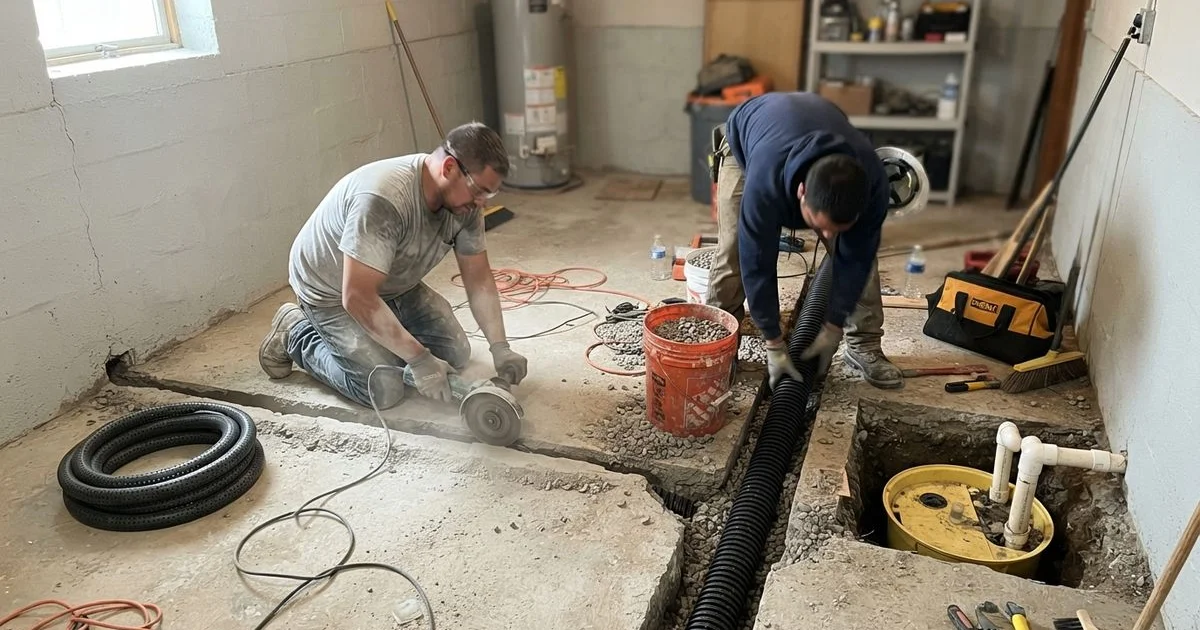
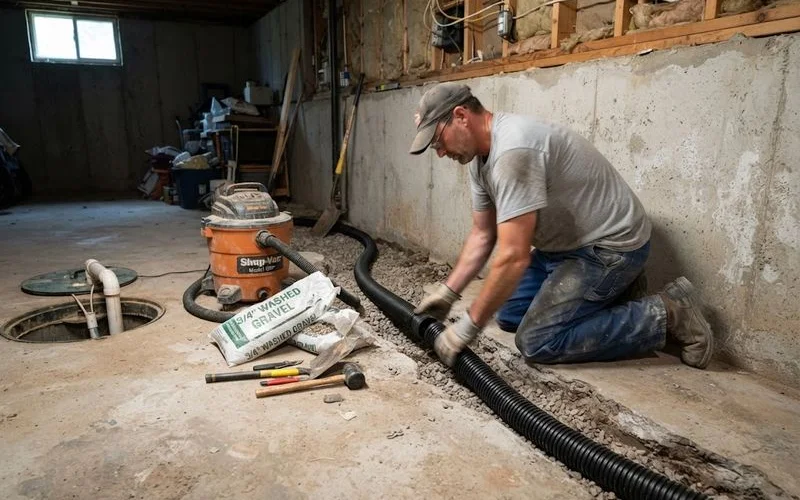
Interior jobs typically start with cutting a channel along the basement floor perimeter, installing perforated drain pipe in a gravel bed, connecting it to a sump pit and pump, then patching the concrete. Expect dust and noise for one to three days.
Exterior jobs start with excavation equipment digging down to the footing along the affected wall. The crew cleans and inspects the exposed foundation, applies a waterproof membrane or coating, installs or replaces drain tile at the footing, and backfills with material that drains well. This takes longer, often a week or more, and disrupts any landscaping, walkways, or plantings near the work area.
| Job type | Typical duration | What’s disrupted |
|---|---|---|
| Crack injection (interior) | A few hours | Minimal; small dust from drilling |
| Interior drain tile + sump pump | 1-3 days | Concrete cutting, some dust throughout the basement |
| Exterior excavation + membrane | 1 week or more | Yard, landscaping, walkways near the foundation |
Step 4: testing before they leave
Before the crew packs up, a thorough job includes testing the sump pump by pouring water into the pit to confirm it cycles correctly, checking that patched cracks are sealed and dry, and confirming grading and downspouts direct water away from the house rather than toward it. If exterior work was done, ask to see photos of the wall before it was backfilled so you know the membrane went on a clean, properly prepared surface.
Step 5: the follow-up
A waterproofing fix isn’t fully proven until it’s been tested by weather, specifically the next heavy rain or spring snowmelt. Ask what the warranty covers, how long it lasts, and whether it’s honored by the company that did the work rather than a manufacturer with no local presence. A contractor who stands behind the job will come back if water reappears rather than treating the first visit as final.
What to have ready before the crew arrives
A little prep on your end speeds things up. Clear a path to the work area, whether that’s basement storage near the wall being treated or anything in the yard near an exterior dig site. If you have a finished basement, ask ahead of time what happens to drywall or flooring near the work, since some of it may need to come out and get replaced afterward. Move anything valuable or hard to replace out of the immediate area regardless, since dust and equipment movement are part of the process even with a careful crew.
It also helps to have a simple history ready to share: when the water problem started, what season it’s worst in, and anything you’ve already tried. A contractor who gets a clear picture up front can often diagnose faster and avoid guessing at a fix that doesn’t match what’s actually happening in your basement.
If your home also needs a separate fix, like a crawl space that stays musty or a single foundation crack, those are often priced and scheduled as their own smaller projects rather than folded into a full basement job. Deciding between an interior and an exterior approach is its own decision worth thinking through carefully before you commit. For the full detail on how we evaluate and score the contractors listed on this site, see our ranking method.
FAQ
- How long does a basement waterproofing job actually take?
- Interior work like drain tile and a sump pump usually takes one to three days. Exterior excavation takes longer, often a week or more, since it involves digging around the foundation and restoring the yard afterward.
- Do I need to be home during the work?
- You don't have to be present for the whole job, but most crews want someone available at the start for the walkthrough and again at the end to review what was done. Ask the contractor what access they need to the basement and yard.
- Will my basement be a mess during the job?
- Interior work involves cutting concrete, which creates dust; ask what dust control measures the crew uses. Exterior work disrupts landscaping near the foundation. A reasonable contractor will explain what gets restored and what doesn't.
- How do I know the job is actually finished and done well?
- Check that water no longer pools near the foundation during the next heavy rain, that the sump pump cycles properly when tested, and that any patched cracks stay dry through a full wet season. A good contractor gives you this in writing along with the warranty terms.