Waterproofing an older or stone-foundation home in Rock County
By Sofia Kaur · Updated 2026-08-31
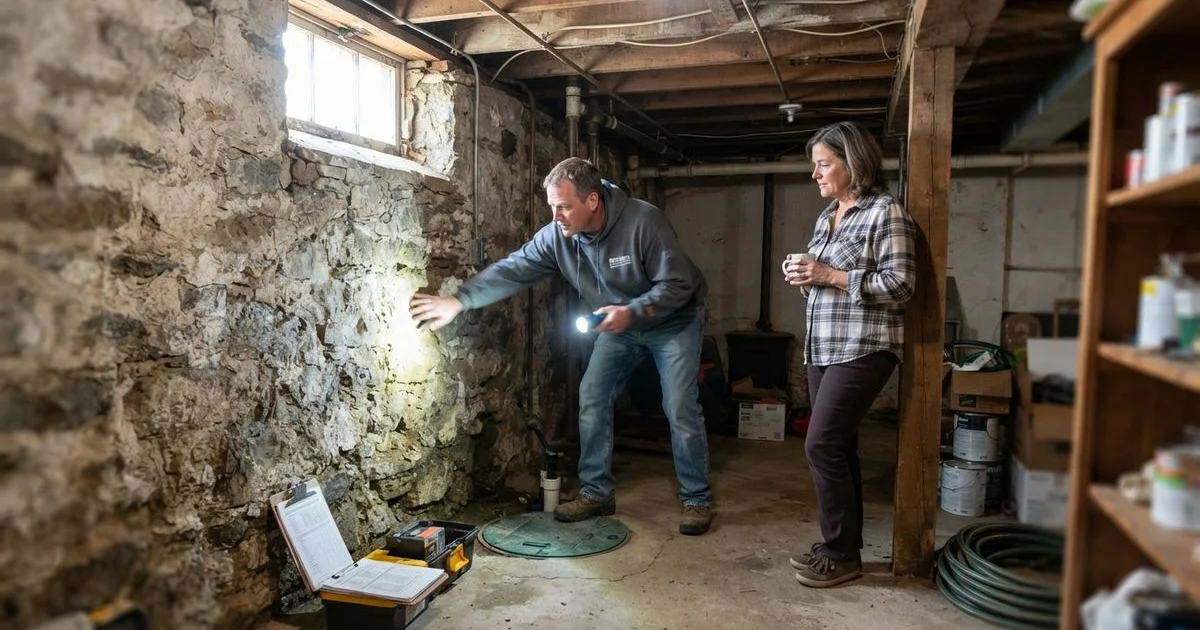
Rock County’s housing stock includes a lot of homes built well before modern waterproofing standards existed, farmhouses with stone or rubble foundations, older Janesville and Beloit homes from before the 1960s, and properties where whatever drainage system was originally installed has likely failed or clogged decades ago. Waterproofing these homes isn’t automatically harder, but it does call for a contractor who knows what they’re actually looking at.
What’s different about older foundations
Stone and rubble foundations, common in farmhouses and some of the county’s oldest housing, are more irregular than poured concrete. Mortar joints between stones can deteriorate over a century of freeze-thaw cycles, creating multiple small entry points for water rather than one clean crack. A contractor experienced with this construction type knows to inspect joint by joint rather than assuming a standard poured-wall crack pattern.
Homes built before the 1960s and 70s frequently have no exterior drain tile at all, since it wasn’t standard construction practice at the time. Where drain tile does exist, it’s often the older clay tile style: short segments of ceramic pipe with open joints, which fail in predictable ways over decades. Tree roots find their way into the joints and expand, silt washes in and restricts flow, and the clay itself becomes brittle. Confirming whether a working drain system even exists is a real first step, not an assumption.
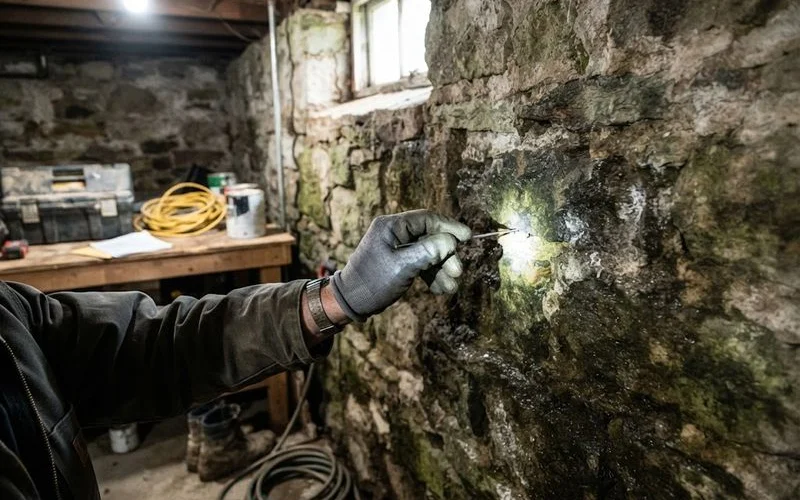
What a good inspection looks like on an older home
| What to check | Why it matters more on older homes |
|---|---|
| Foundation material (poured, block, stone, rubble) | Determines the right membrane, coating, or repair method |
| Presence and condition of existing drain tile | Older clay tile systems fail differently than modern perforated pipe |
| Mortar joint condition (stone/rubble foundations) | Multiple small leak points are common, not just one crack |
| Prior repairs or patches | Layers of old, undocumented fixes can complicate diagnosis |
| Settlement or structural movement | Older homes have had more decades for soil movement to show up |
Questions worth asking a contractor directly
Ask whether they’ve worked on stone or rubble foundations specifically, not just poured concrete. Ask how they’d confirm whether existing drain tile is clay or modern pipe, and whether that changes their recommended approach. And ask what they’d do differently on an older home versus new construction, since a contractor who gives a generic answer here may be applying a one-size-fits-all method to a foundation that doesn’t fit that mold.
Structural movement is more common, and needs its own read
Decades of freeze-thaw cycles and settling soil mean older foundations are more likely to show some degree of structural movement, a slightly bowed wall, a stair-step crack in a block foundation, or a floor that’s noticeably out of level. This doesn’t automatically mean a crisis, but it does mean a waterproofing contractor should be honest about the difference between a cosmetic crack and one that signals ongoing movement worth a closer structural look. A contractor focused only on stopping water, without flagging visible signs of wall movement, may be missing half the picture on an older home.
Finishing a basement in an older home
If the goal is eventually finishing the basement for living space, address any water intrusion and foundation issues first. Covering a damp wall with new drywall doesn’t fix the underlying problem, it just delays discovering it until the new finishes are already damaged. It’s also worth confirming whether the space will need a code-compliant egress point if it’s going to include a bedroom, since that’s a separate consideration from waterproofing itself but often comes up in the same renovation. If you haven’t been through a job like this before, our guide to what happens during a basement waterproofing job walks through what’s normal once a crew starts, and what isn’t.
Budget for the possibility that an older basement needs more than one type of work before it’s ready to finish, drainage first, then any structural stabilization, then the egress and finishing work itself. Sequencing it in that order, rather than finishing first and hoping the water problem stays solved, tends to save money and frustration over the life of the project.
Our basement waterproofing category lists Rock County contractors, including those with experience on the older housing stock common throughout Janesville, Beloit, and the surrounding towns. See our ranking method for how those rankings are built, or head back to the Rock County Waterproofing Guide home page to browse the full list of local providers.
FAQ
- Do stone foundations need a different waterproofing approach than poured concrete?
- Often, yes. Stone and rubble foundations are more irregular and porous than poured concrete, so membrane and drainage work needs a contractor who has actually handled that construction type before, not just standard poured-wall techniques.
- Is it true older homes usually don't have exterior drain tile at all?
- It's common, especially in homes built before the 1960s and 70s, when exterior drain tile wasn't standard practice or code requirement. If your home has never had visible waterproofing work done, there's a reasonable chance it has none, which is worth confirming during an inspection rather than assuming either way.
- Does an old clay tile drain system still work?
- Sometimes, but they fail predictably over decades: tree roots intrude at the open joints, silt accumulates inside, and the clay itself gets brittle with age. A contractor typically has to excavate a small section to check the actual condition before recommending a repair or full replacement.
- Will finishing an older basement require extra work first?
- Often yes. Older basements sometimes need foundation crack repair, a check for structural movement, or drainage upgrades addressed before finishing work begins, since covering up an active moisture problem just hides it until it resurfaces in the new finishes.